
Rewiring Focus: Optimizing The Neurodiverse Brain, Lean Startup Style
Re-engineering the Build → Measure → Learn (BML) loop for an adult ADHD Brain.

While building products & systems, I’d often apply the build, measure, learn (BML) loop: Build → Measure → Learn.
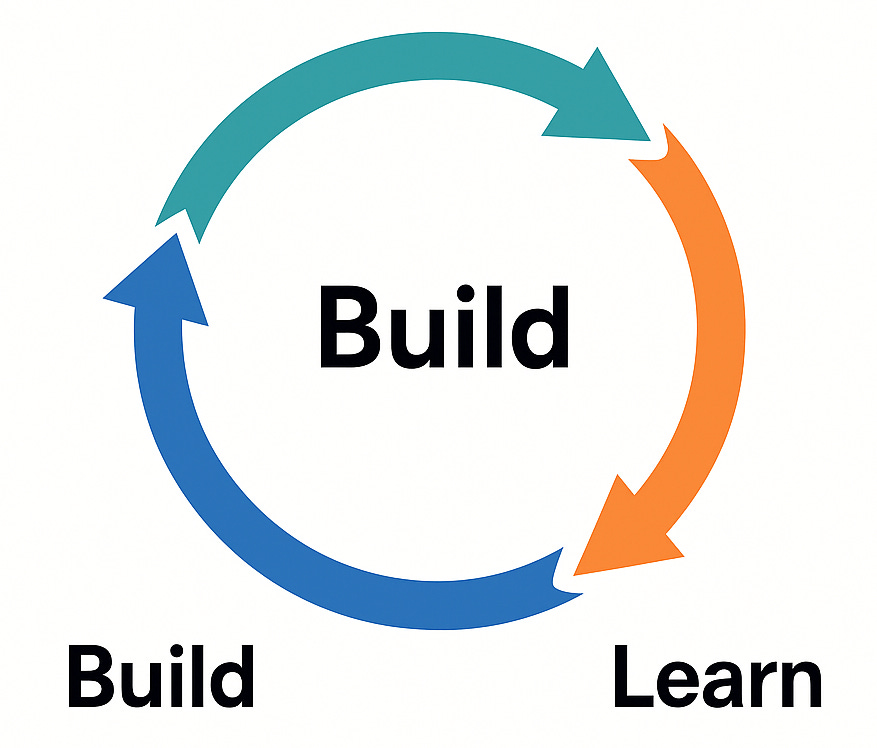
The loop worked so well for me that I began to ask why.
When it comes to ADHD brains, our dopaminergic system behaves differently.
Dopamine release is delayed, especially with long, ambiguous tasks
Reward prediction errors hit harder - we expect a big internal win, and don’t get it
Low dopamine means motivation often needs external triggers to spike
This creates a pattern: we know what we want to do. But unless it triggers fast, visual feedback, our brain will never kick into gear. So we stall or hyper-fixate on something else entirely. Or feel guilty and try to push through, which drains us faster.
All this led me to ask myself:
What if I applied that same loop to myself, optimizing it with my brain chemistry?
I sketched out what moves the needle for a neurodivergent brain that responds positively to visual feedback. Here’s what the rough sketches looked like:


This is a chemistry-aligned loop system.
Why does this loop work?
The loop mirrors how dopamine is released in ADHD brains:
Start something small → mild anticipatory dopamine
See fast, visible progress → spike of dopamine
Positive reinforcement (by the system) → social and emotional dopamine bump
Feel momentum → dopamine sustain
Each stage matters. Remove one, and the loop breaks. Keep all four, and the brain gets what it needs to stay engaged without burning out.
Start small, make it visual
I stopped trying to “push through” large tasks. Now, my focus is to assign a visual completion identifier to each task. It’s about visible positive reinforcement. That’s the reward trigger. How I do it:
Break tasks into microtasks: I use prompts like “Split this into 5 microtasks under 30 minutes each” to keep things manageable.
Assign a visual identifier: Each microtask gets a tangible, visual identifier that signals momentum is occurring, such as moving a Trello card or ticking a Workflowy checkbox.
Timebox everything: I use Timer (chrome extension) to schedule only bite-sized work blocks (no blank calendar stress)
Add novelty: Switching up playlists (no vocals EDM), locations, or tools keeps things fresh.
Ride the momentum
These visual identifiers drive momentum, refueling a loop’s completion.
When small, quick wins (reinforcement) are seen, you get a small spike in dopamine, enough to feed the loop and move on to the next micro-task. When the loop works, you don’t force motivation; you ride it like a wave.
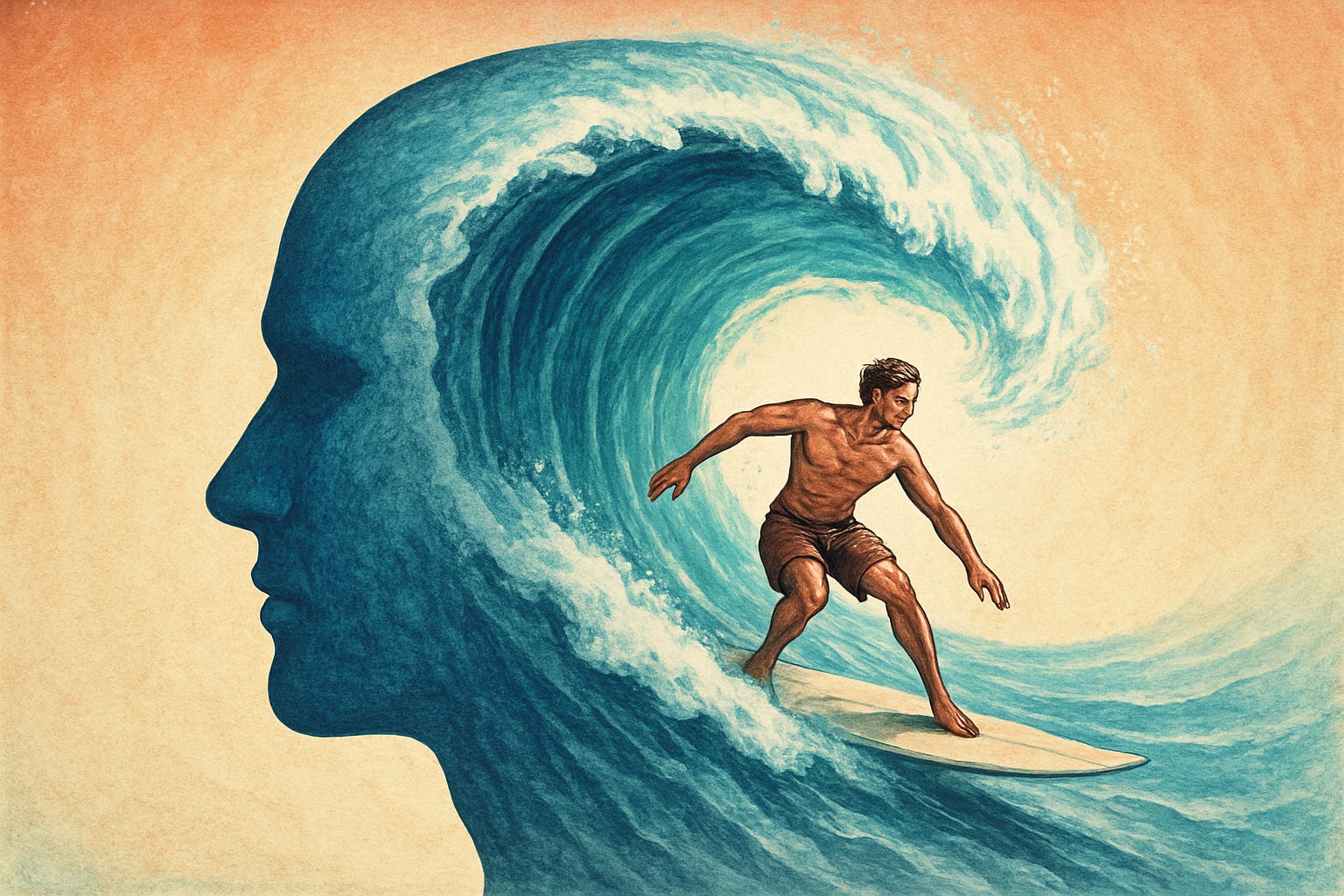
It’s why writing a few lines of code that return a function can be so gratifying. It could also be a few paragraphs of a Substack post.
Final notes
I used to wait for motivation. Now, I stopped fighting how my brain works and instead designed my workflow around it. Everything made sense once I saw this as a dopamine flow system.
Technology can help, but only you can reframe productivity through the lens of your brain chemistry.
Once you align your workflow with your brain’s natural rhythm, productivity becomes less about willpower and more about flow.
Source Links
Multiple studies indicate that dopamine signaling is altered in people with ADHD, with differences in dopamine transporter (DAT) density and receptor availability compared to non-ADHD individuals 1.
Studies show that adults with ADHD have blunted reinforcement sensitivity and altered neural signals in reward-related brain regions 6.
Studies have demonstrated decreased function in the dopamine reward pathway. Intrinsic motivation is often insufficient, and external incentives or triggers are needed to stimulate motivation and task engagement 4.